Meet The Artist
*
Meet The Artist *
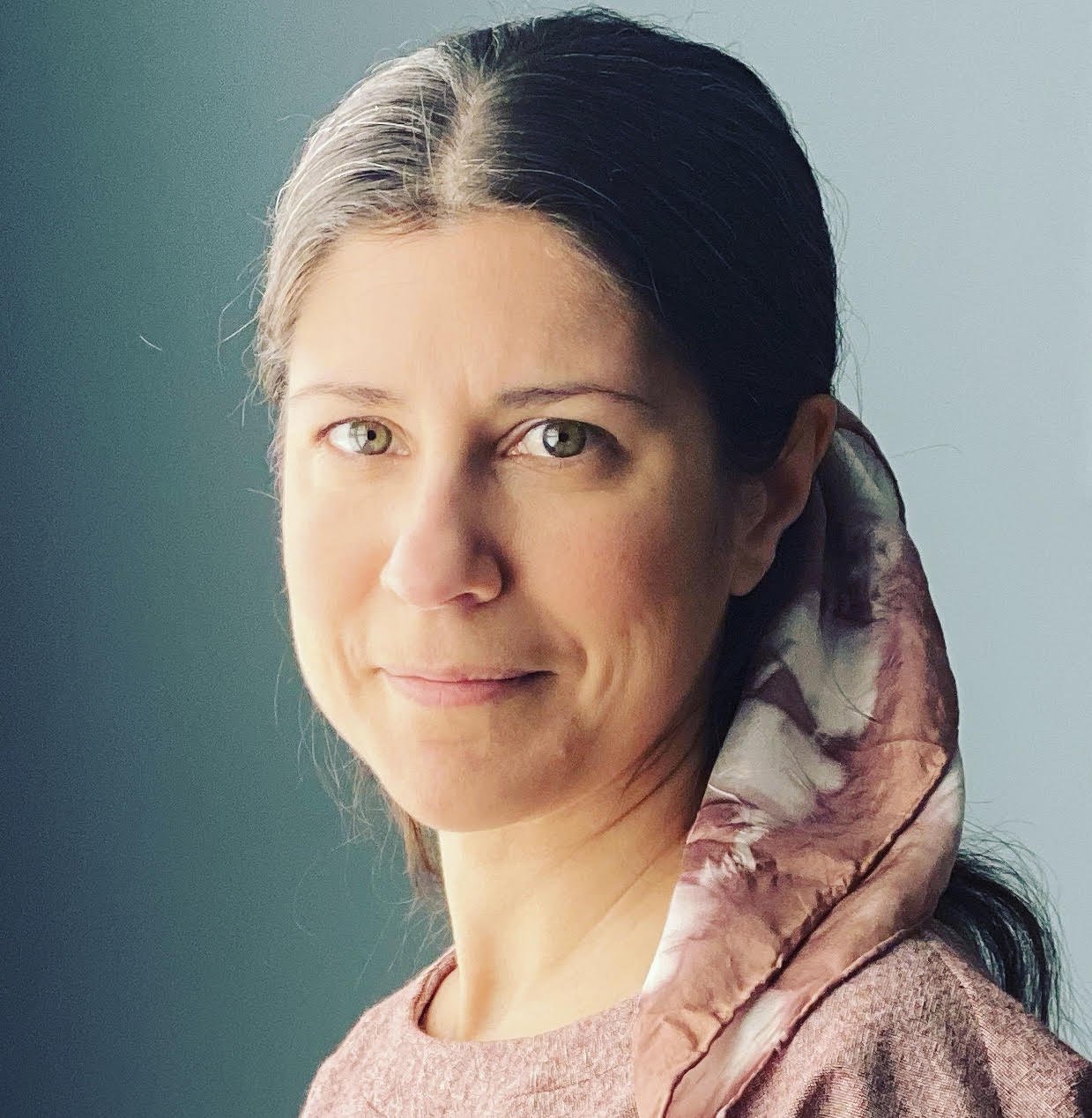
The Sly Barn Collectible Ornament by Warwick Artist Jenny Torino is a Limited-Edition Treasure
By Jennifer O’Connor
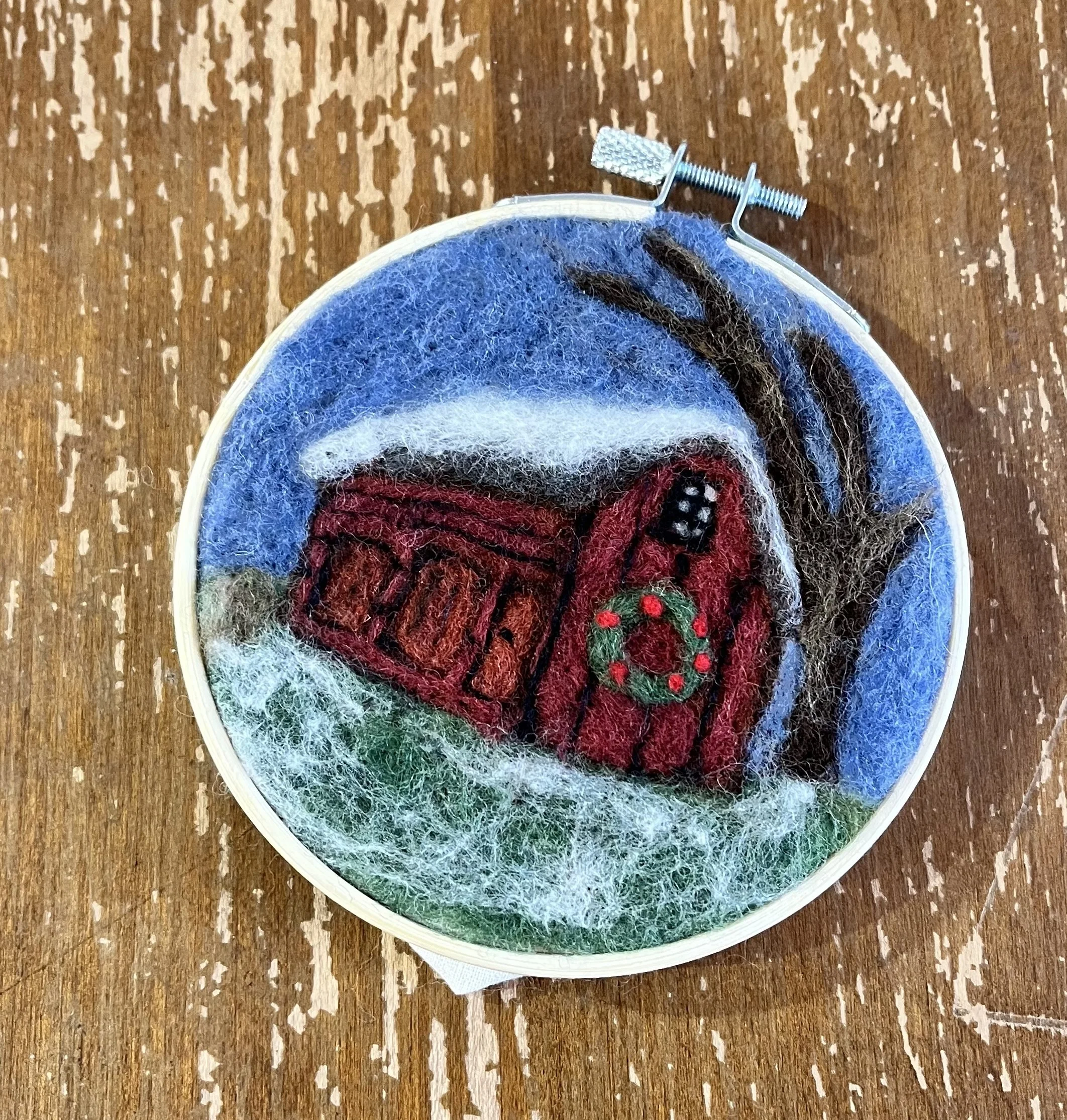
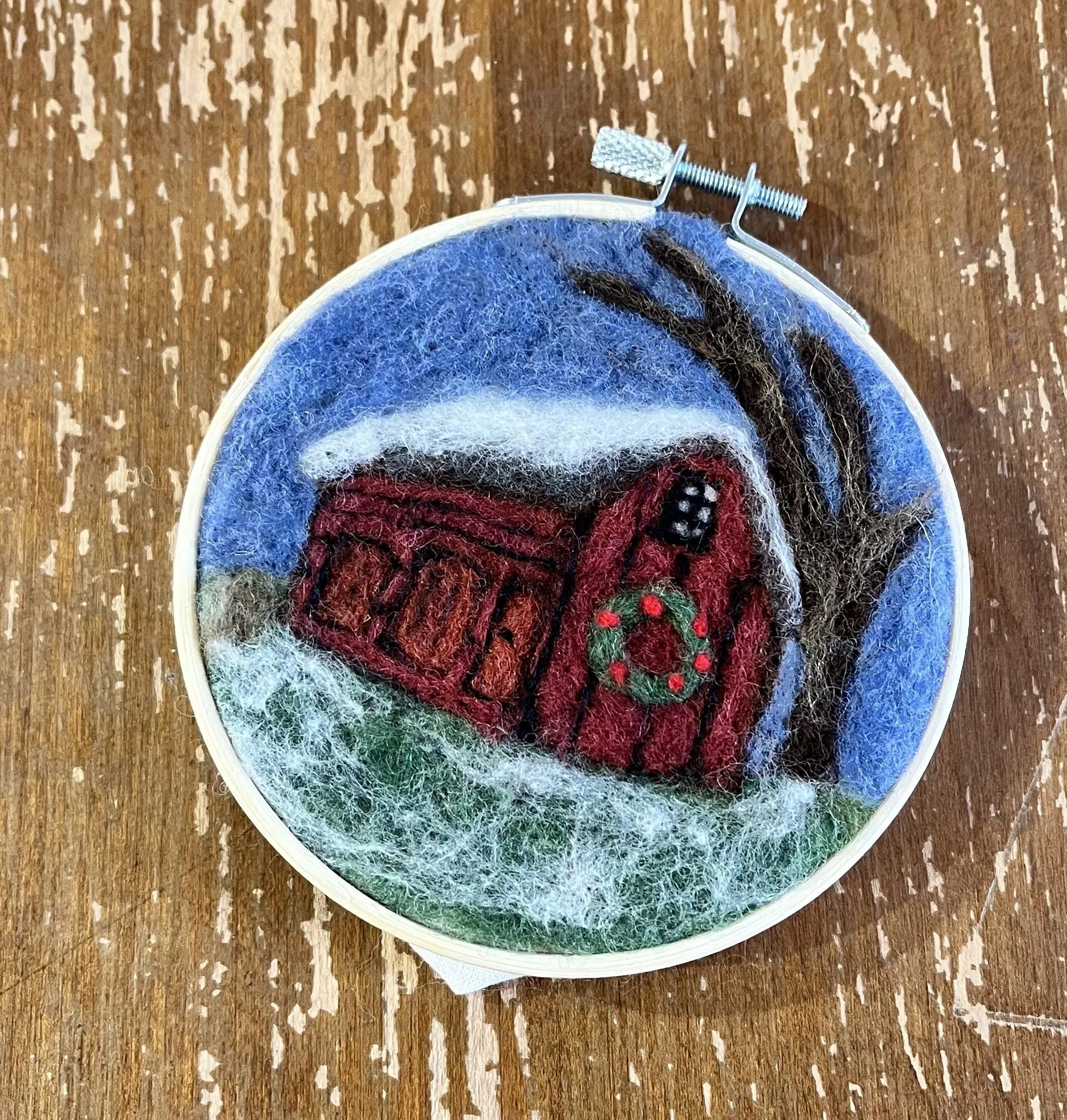
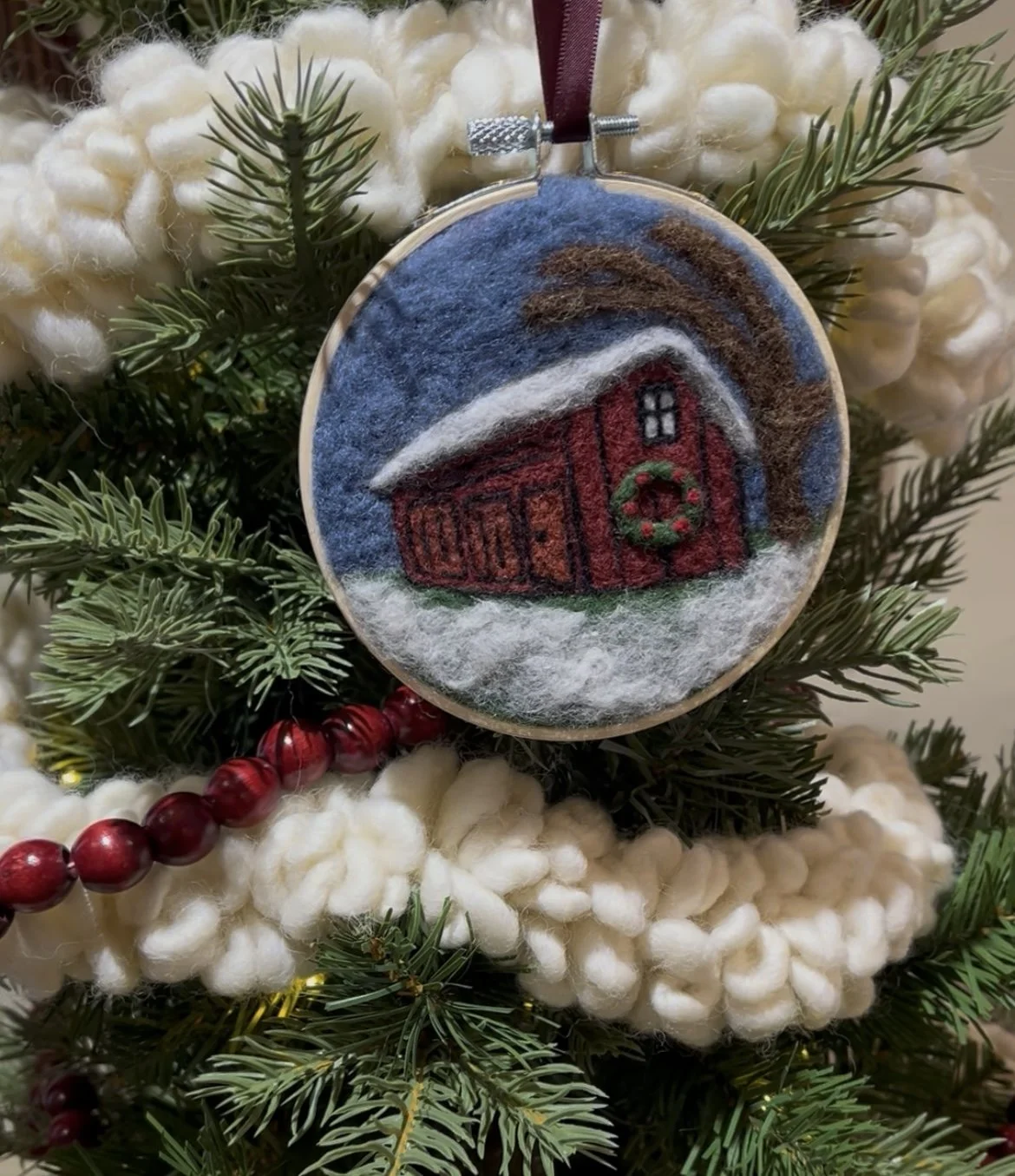
The Warwick Historical Society is thrilled to announce this year’s collectible ornament - The Sly Barn, created by Warwick artist Jenny Torino. Each ornament is handcrafted and individually numbered, making it a limited-edition treasure and a perfect gift for anyone who knows and loves Warwick. I chatted with Jenny in a phone interview to learn more about her creative process.
JENNIFER O’CONNOR: When I read your bio online that you are an interdisciplinary artist that primarily uses fibers such as felting wool, textiles and paper to create felt sculptures, I wondered what exactly is the process of felting?
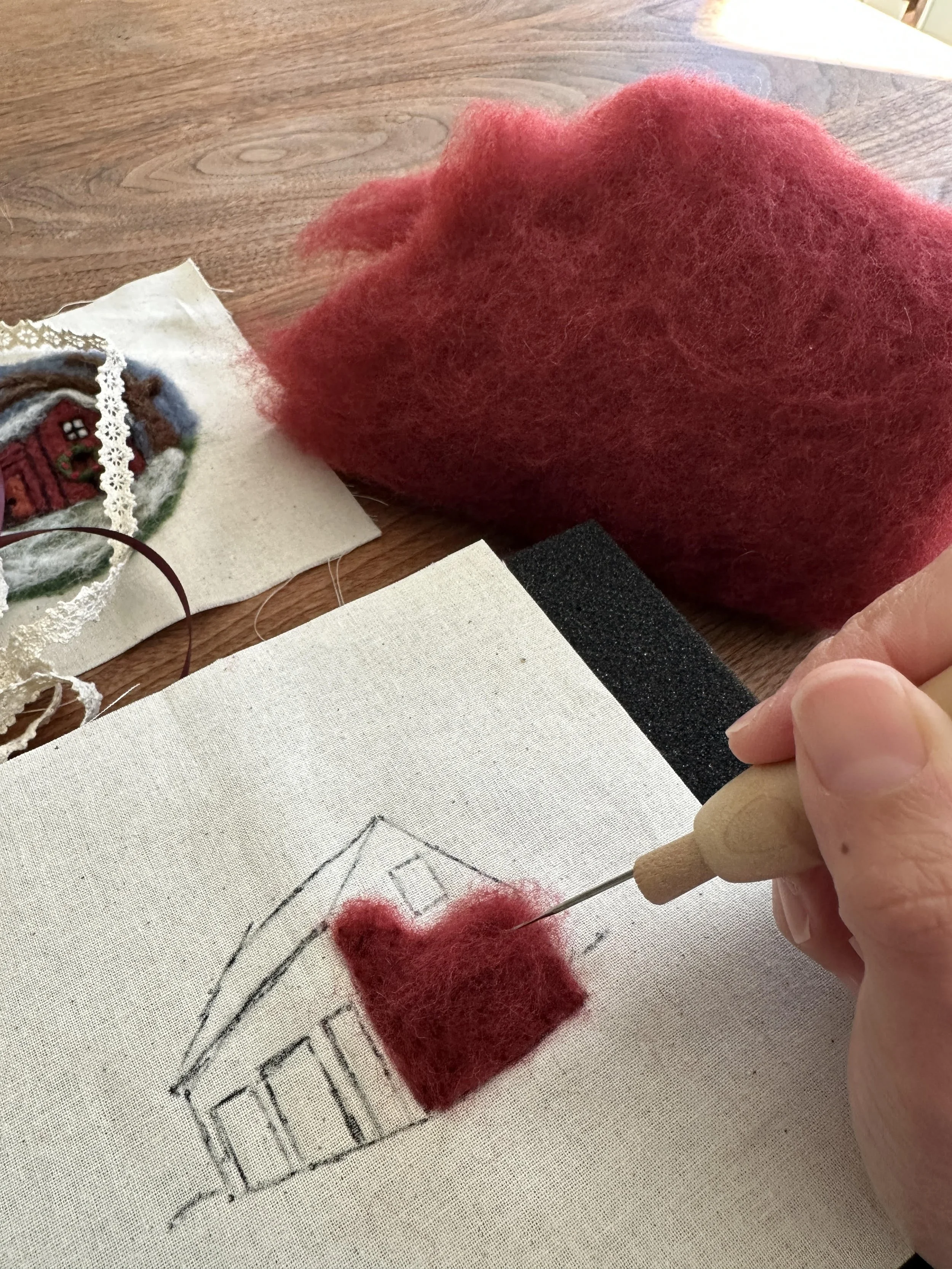
JENNY TORINO: There are two different types of felting. There’s needle felting and wet felting. I do both. Wet felting is when you use wool that is similar to the consistency of a cotton ball. It is unspun wool that’s been cleaned and processed but that has not been spun into yarn yet. Before the wool gets spun into yarn, you can use those fibers and lay them out. You then use soap, water, and physical agitation, like rolling, to interlock the fibers together to become one solid piece of fabric. It’s really fun to do. Wet felting is primarily used to make garments like scarves and jackets. Some people use it to make vessels like bowls of different shapes and sizes. Others make lamp shades and lit pieces. I was taken by the large variety of things you can do with the medium and I am really happy to be able to use natural materials to make art pieces.
Jenny creating one of the ornaments for the WHS.
O’CONNOR: Which type of felting are you using to make the ornaments for the Warwick Historical Society and how long does it take to create one?
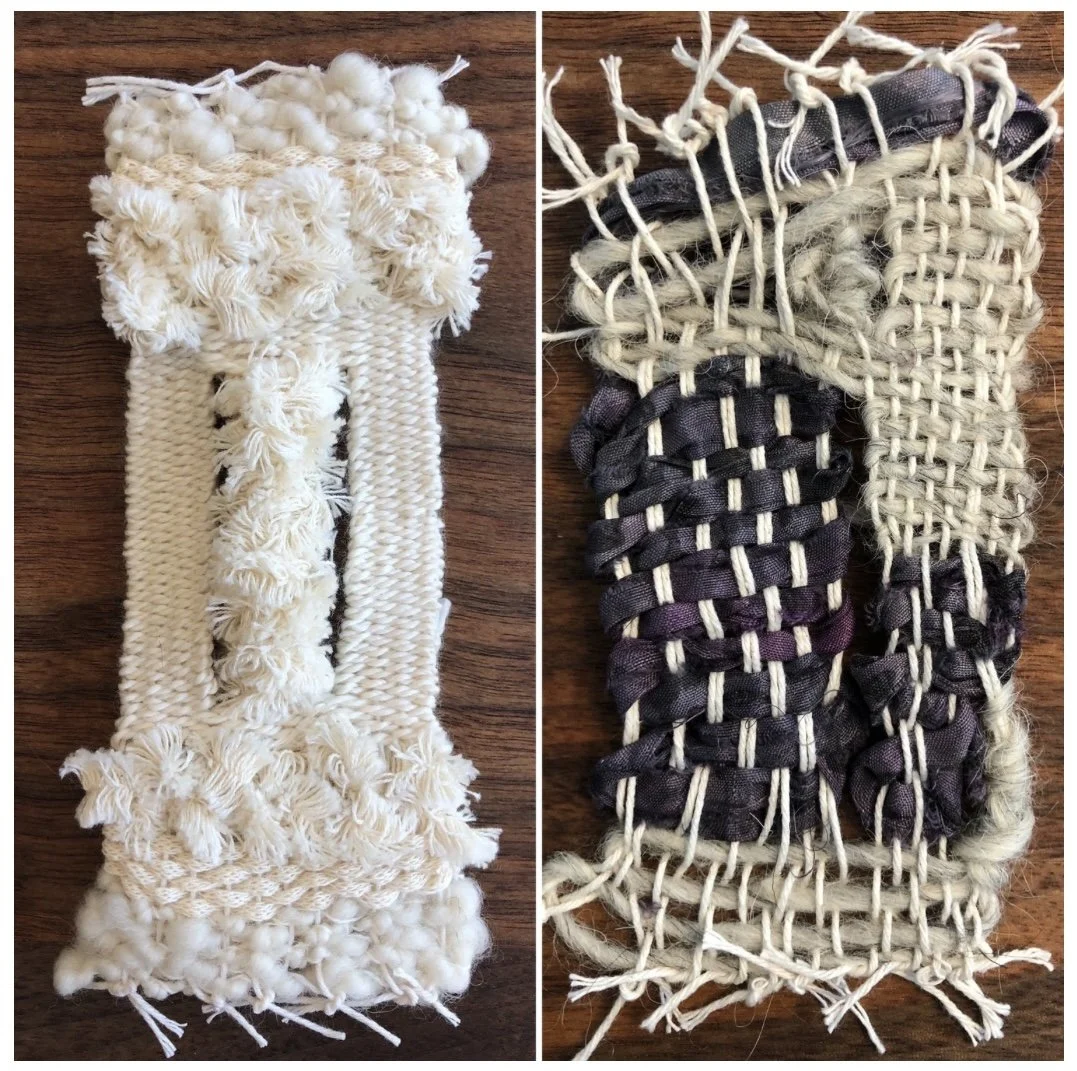
Mini Messy Weavings, 2020. Cotton thread and recycled sari silk, Left 2.5” x6” Right 2.5” x 4.5”
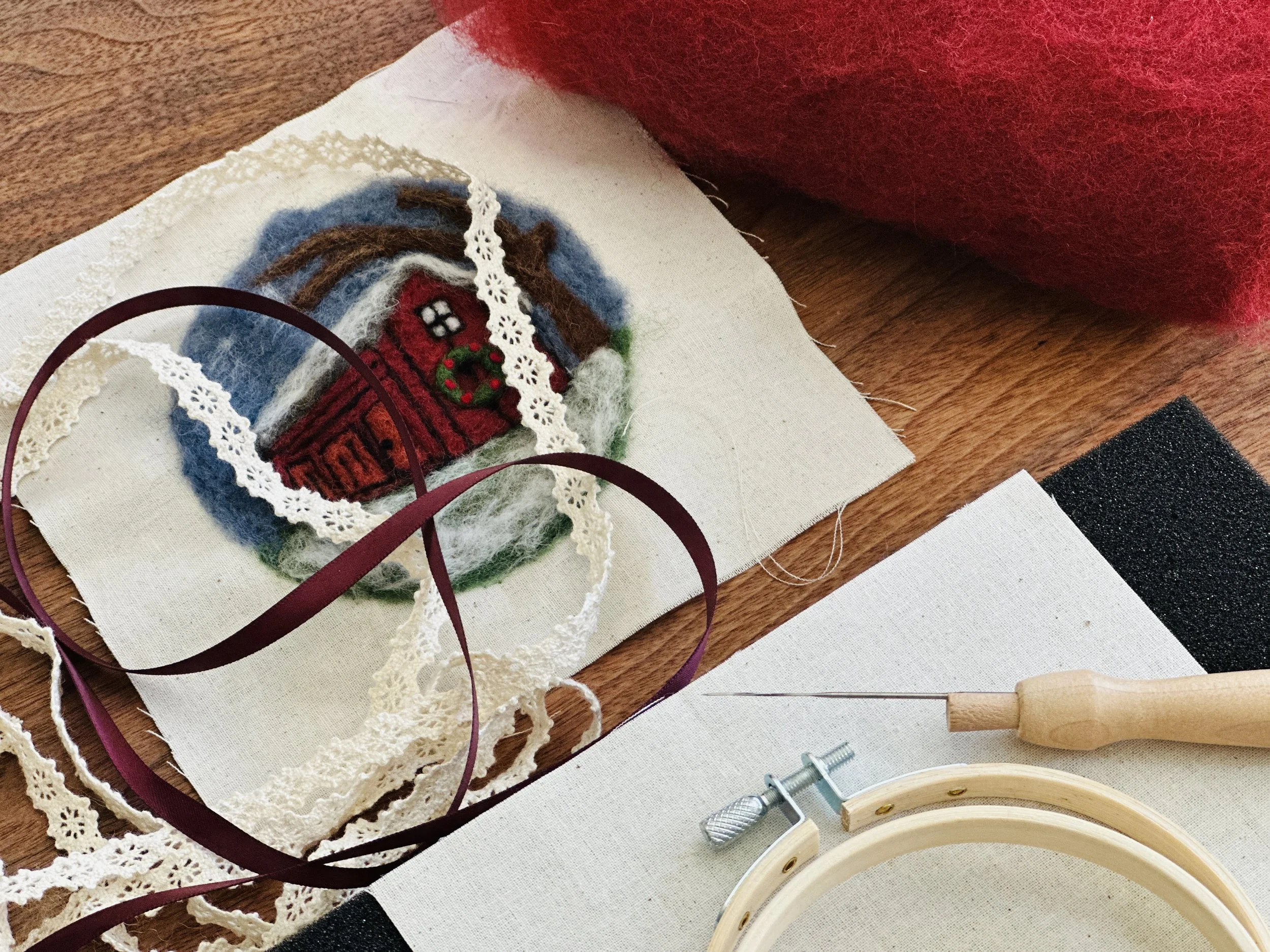
TORINO: I am using needle felting for the ornaments. It takes over an hour to create an ornament and to do the framing. With needle felting you can make flat pictures or 3D ornaments. There is a special felting needle that has little barbs at the end and when you pull the needle in and out of the wool it interlocks the fibers together to create a solid piece.
“ I find that it’s stress-relieving. Although it takes a lot of time to create something, the time goes by very fast.”
TORINO: Wet felting is very physical. It takes hours of rolling the fibers in order to get it at the point where the fibers come together. I consider it exercise too. It doesn’t require a lot of supplies and it is not cost prohibitive. You need wool and something to roll your piece in to keep it together. Lots of times people use bubble wrap. They lay their wool out on the bubble wrap and put another piece over the top, and then they roll it in a wooden dowel or a pool noodle. You also need soap, water and something to sprinkle the water on with. Some people like to incorporate fabric into it, but you don’t need the fabric. Needle felting is not very physical. You’re sitting very still with a little needle and poking the wool into the shape that you want it to be. It’s time consuming. This type of art makes you slow down and be patient. It’s not something where you would aim to make things very quickly because that’s not going to happen.
O’CONNOR: In what ways does wet felting differ from needle felting?
O’CONNOR: Needle felting seems like it can be therapeutic, do you feel that way about it?
TORINO : Yes, absolutely! I find that it’s stress-relieving. Although it takes a lot of time to create something, the time goes by very fast. Especially with the needle felting, it helps you to pay attention to little details that you would not normally pay attention to. It makes you stop and slow down.
O’CONNOR: I’m curious as to when did you first encounter this medium?
TORINO : I had always been interested in costumes in theatre and sewing but didn’t have time to dedicate to it. I loved costumes and textiles. In my 20s, I decided to focus on sewing and to improve my sewing skills. I wanted to be more creative instead of following a sewing pattern. When I went to the Sheep and Wool Festival in Rhinebeck, NY, I attended a felting workshop. The person who taught it went to fashion school and she explained to us how you can transfer that skill into making a garment. After that I started to do more research and found people online who work in this medium.
O’CONNOR: To improve your skills, did you watch a lot of videos online to get to the level that you are at today?
TORINO : I took classes online from a teacher who lives in Canada and I learned a lot from her. Her name is Fiona Duthie. She gives video and written instructions. Everyone works on their own and can post their results. She will look at your work and answer your questions. I also took classes online from a woman who does realistic looking needle felting. A lot of needle felting can look cartoonish but she was doing these realistic looking mushrooms. Each week she would post a new project and I learned a lot of needle felting from her.
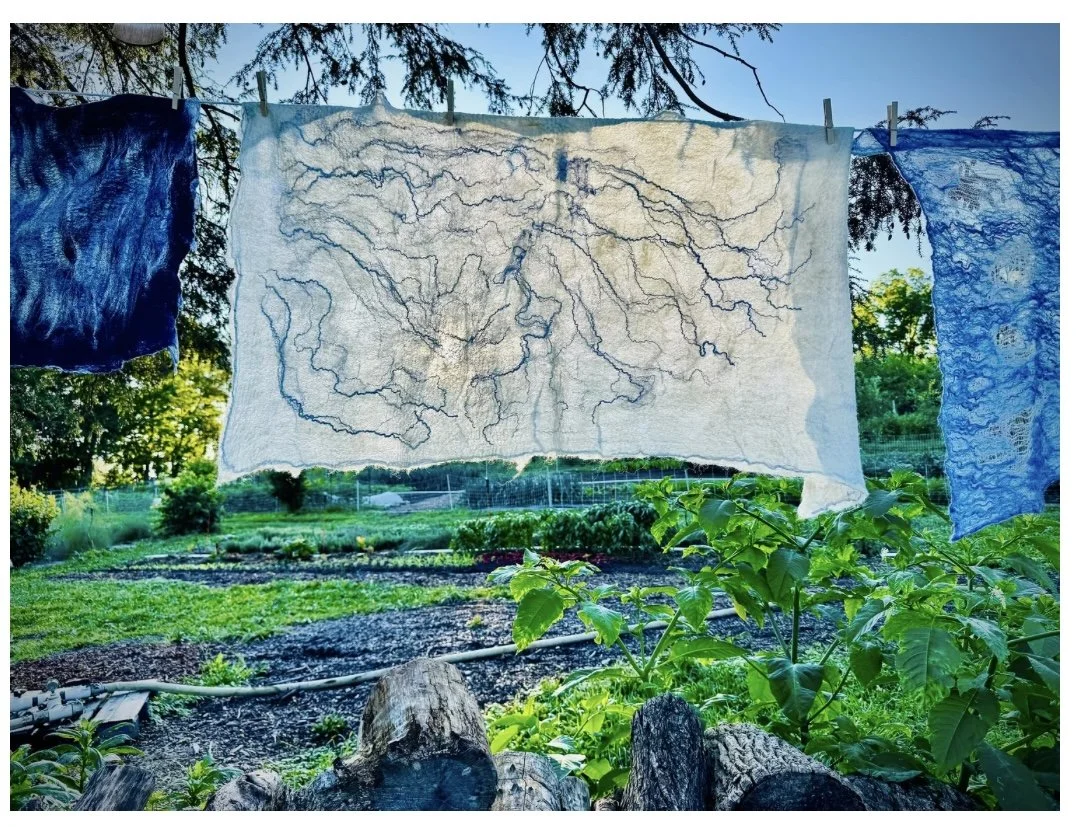
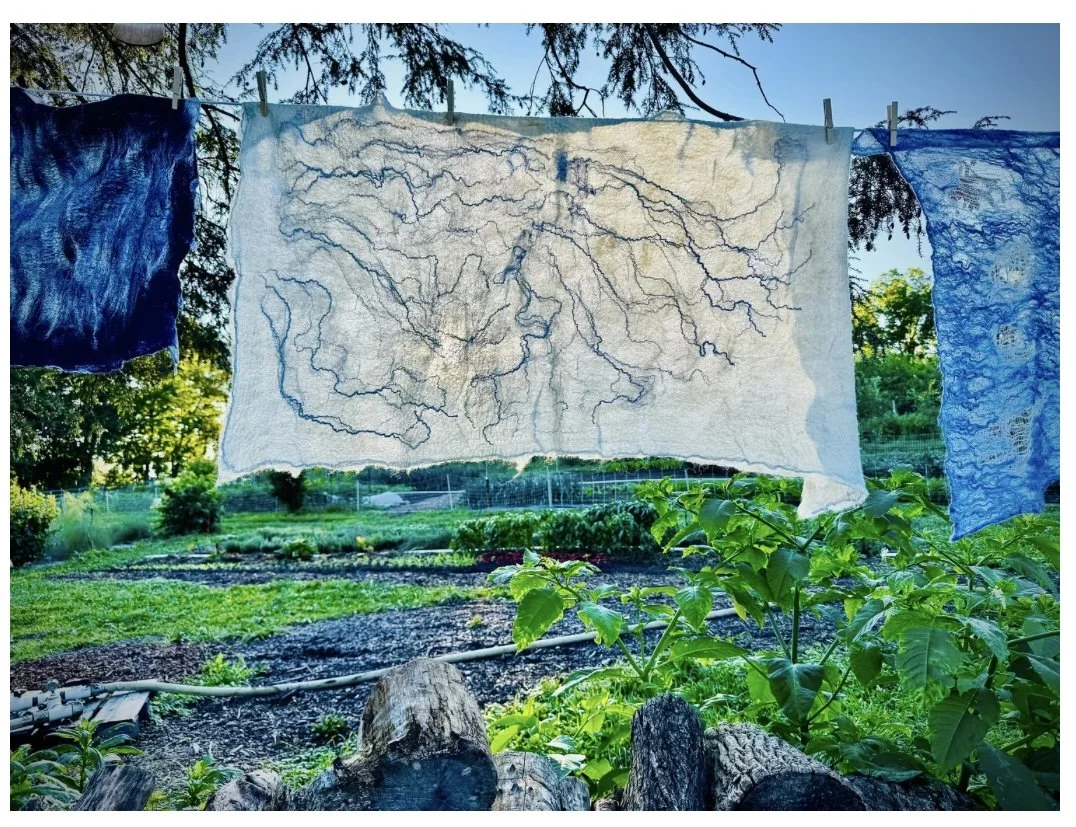
Felted Textile, 2020 Merino Wool, Sari Silk Waste 54” x 29.5”
O’CONNOR : After perfecting the craft for many years, are you teaching classes now?
TORINO: Yes, I travel around and teach classes at Wickham Works, the All One One All Farm in Goshen, the Creative Space in a Beacon, and Hudson Valley Atelier in the Village of Florida. I also give private classes for small groups at people’s houses and I teach adult and kids sewing classes with Kristen Orthmann at Confetti’s Create and Celebrate in Warwick. Recently, I did a wet felting training workshop for the art teachers in the Warwick School District. I showed them projects that they could do with children of all ages. If anyone is interested in learning about my upcoming workshops and classes they can follow my Instagram account - J.Torino.
O’CONNOR : Is there anywhere in particular where you get your wool from?
TORINO: I get wool from a few different places. I order a lot online. In 2024, I did an artist residency at the All One One All Farm in Goshen where they have Karakul sheep and I used their fiber. I learned about the entire process of how they raise their sheep. I helped with the sheep shearing. I delivered the wool to a processing mill. I was able to use the wool from the farm and I made wet felted sunflowers to hang on a wall. Every breed of sheep has different wool. The Karakul sheep have a coarse texture. It’s not something you would make a scarf out of but it’s perfect for a rug and or for decorative pieces. I do want to use as much local wool as I can. I am hoping in the future to use wool from Catskill Merino in Warwick.
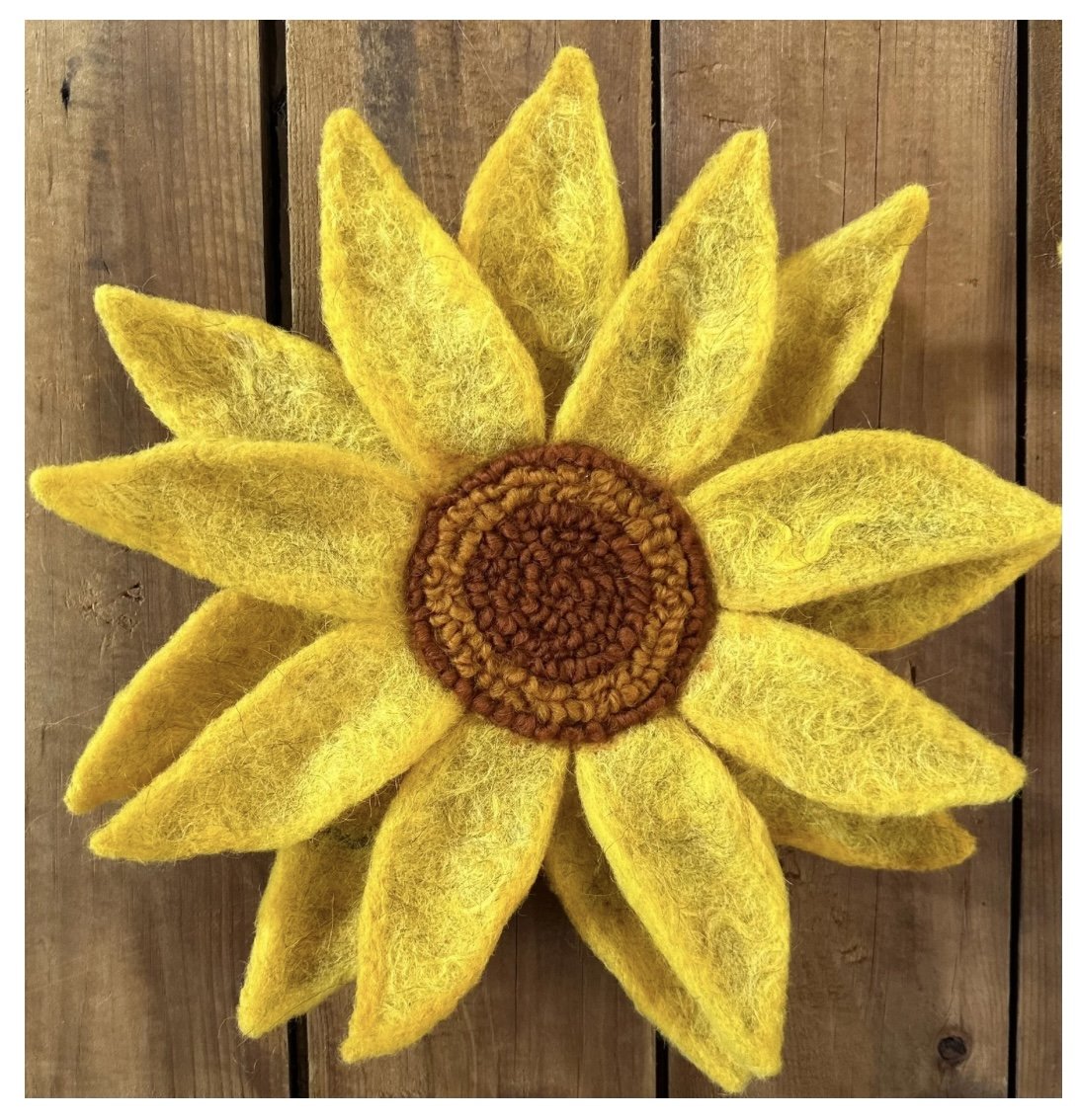
Sunflower, 2024 Wet felted Karakul Sheep Fiber, Merino Wool, Gulf Coast Wool, 13.5” × 13.5” × 2”
O’CONNOR :The sunflowers you created seem so unique and amazing, is that one of your favorite projects?
TORINO: They are one of my favorite projects. I also enjoy combining paper and felt together to make a lamp. It’s pretty amazing. The wool can be soft like a fabric. When you combine paper with it, it gives a rigidity to it, and helps the lamp to stand up.
O’CONNOR : Do you think that more people are learning about felting and that interest is growing in the medium?
TORINO: It’s definitely growing and what’s good about it is that it’s an easy craft to learn. You don’t need a lot of supplies. With needle felting, if there’s something you don’t like when you are creating a piece you can simply change it. Needle felting is for older mature teens because the needles are sharp and they can break. Children that are 12 years old can participate but they should do so under adult supervision. Wet felting is more suitable for young children and there’s projects that are appropriate for a variety of age levels. In Waldorf education, felting is part of their curriculum.
O’CONNOR : Why did you want to collaborate with the Warwick Historical Society?
TORINO: I’ve lived in Warwick for eight years, and I’ve always followed the Society’s events. I love the old buildings that the Historical Society preserves. I very much respect what you all do. Preserving these buildings is important. It’s what gives character to this Town. It would be a shame if those buildings fell apart and it was all new structures. I have a friend who is in the Warwick Valley Chamber of Commerce and she saw the ad that the Society is looking to collaborate with local artists to create an ornament. I contacted Christopher Sloan, the Society’s Executive Director, and he was enthusiastic about working with me.
Jennifer O'Connor is a journalist and longtime Warwick resident, where she lives with her family. She is currently on the Warwick Historical Society Board of Directors where she also served as the president.
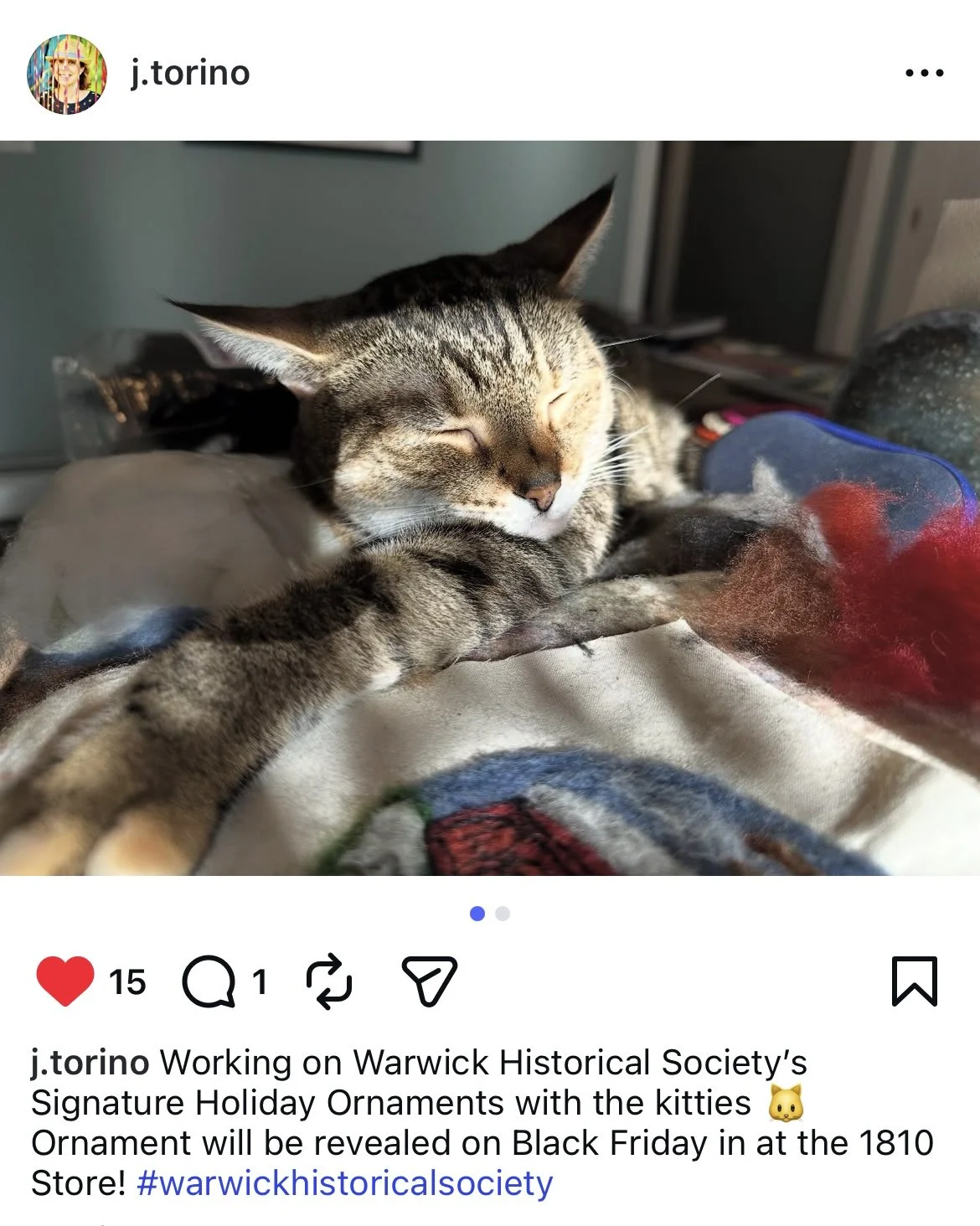
For those who would like to purchase the ornament, it will debut on Friday, November 28th (Black Friday) during the 1810 Store’s 1-Year Anniversary Celebration! Jenny will be on hand with more of her beautiful creations — you won’t want to miss it. The 1810 Store is located at 80 Main St. in Warwick, NY, Limited quantities available!